
There has been a resurgence recently in people talking about ‘Children of the Magenta Line’ which was an airline safety talk from last century concentrating on the burgeoning GPS/FMS and automation driven cockpits.
Many people seem to be quoting from this to explain some recent airline accidents as there was a perceived link in causality where automation vs hand-flying is concerned.
I would like to examine the themes and discuss them in light of what we have found over the past 20 years or so, what I am still seeing as current practice as well as how we need to progress.
Automation Dependency
Automation dependency is still an issue as mentioned in the video. I still see pilots letting an aircraft get far closer to the edge of its envelope while on autopilot than they would if they were hand-flying. Generally, I have seen this come from one of three processes: concentration on other tasks while autopilot is on; a general lack of awareness/thought (where the autopilot and brain appear to be mutually exclusive); or an attitude that the autopilot knows better than the pilot so is let go too long. All of these can have dire consequences.
The pilot cannot relax when the autopilot is on as they are still in command of their aircraft and, as is said in the video, must remain tactilely connected to the plane and mentally flying it.
It is also mentioned that this is more the case at low levels, (i.e. below 10,000’) where there is less room for error which is where we, in our Cirrus, spend the majority of our time. We need to be acutely aware that the autopilot has limitations and is fallible.
I also see the literal definition of automation dependency on quite a few occasions. The video mentions that crews are turning on the autopilot in an attempt to resolve a deteriorating situation. I see this and I also see pilots put the autopilot on to compensate for a lack of flying ability. They can often be scared of hand flying or can see the errors their hand flying produces and put the autopilot on to fix that. None of these are acceptable.
Task Saturation
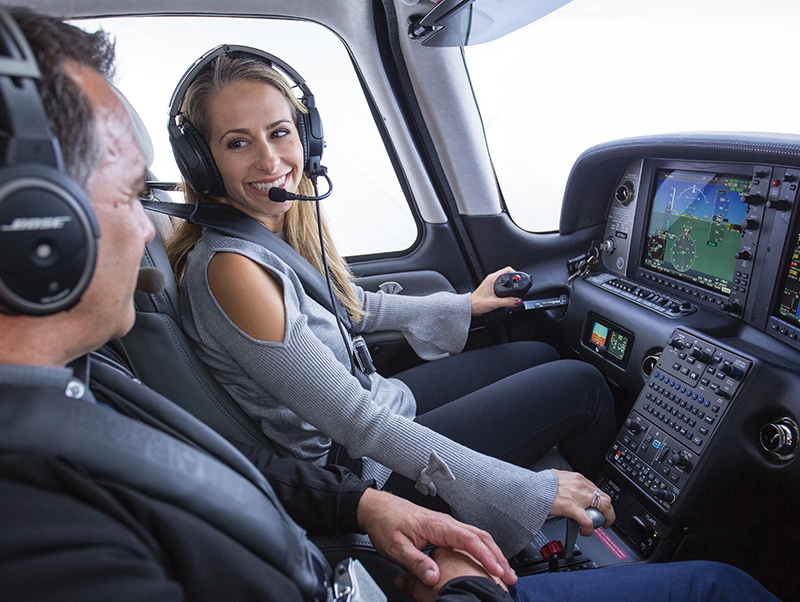
Task saturation is the other major theme from the video and it is still prevalent in the pilot community. It can result from too high a level of automation such as coming into a terminal area where commands need to be followed immediately. An autopilot does not know the word “now” so there is always a delay as we program it, get it to do what we want and for it to achieve the result.
The workload in achieving that detracts from our situational awareness. Some (e.g. COPA), and I agree, promote a step between a loss of situational awareness and a loss of control which is called a ‘loss of command’. It is a logical step. Many pilots realise they are losing situational awareness but few seem to realise when they have dropped further down and have now lost command.
They become unaware of the state of the aircraft. Sadly, a loss of command is often a precursor to a loss of control.
Levels of Automation
When flying an automated cockpit there is quite an additional workload in just managing the systems. Even some simple inputs need to be cross-checked and verified as the system will quite happily perform the way it is programmed whether that is correct and safe or not. Instead of fully automating it may be appropriate to drop back a level or two of automation (i.e. from fully automated to basic HDG/ALT mode or even further to hand-flying) while you get back in command and program the system properly.
Once you are back on top of things then you can increase the levels of automation as appropriate. You must pick the correct level of automation for the task at hand while also realizing that increased automation will require you to take more time away from flying and commanding the aircraft to manage the system/s.
How to combat these
One of the bigger reactions I have heard is that it is a problem with hand-flying skills no longer concentrated on and thus the skills are perishable. It is seen that systems management is taking precedent over the more manual and perishable skills. I agree that we are pilots first and systems managers second and we need to continue to be proficient (not just competent) with the good old ‘stick-and-rudder’. To that end, we should continue to develop these skills whenever we can and turn the automation off to practice them. Cirrus promotes “learn to fly, fly to learn” where we first learn to fly and then we must continually fly to keep learning and keep skills fresh. This is a great way to think about it.
We also need to keep in command of, and connected to, our aircraft. We can start that with some simple tasks.
When putting the autopilot on, select a lateral mode first, then select a vertical mode. This should put the flight director on and you can check the ‘scoreboard’ to ensure you have the correct inputs. You should then fly the aircraft to the flight director and, only when stabilised and trimmed there, turn the autopilot on. That way you are ahead of the aircraft and it is stable before adding a layer of automation.
You can also treat the autopilot as you would an instructor with proper ‘handing over, taking over’ drills. By that I mean you should never let go of the controls until you are sure the other ‘person’ has capable control. Before turning off the autopilot, grasp the controls firmly so there are no surprises when you ‘take over’.
Always move your bugs before the aircraft moves. Setting your heading and altitude bugs before the aircraft moves forces you to think about what is happening before it happens. Think of it this way, if you are in NAV mode on autopilot and coming up to a turn, move the heading bug first to the appropriate heading for the next leg, do a lookout (even if its into cloud keep the habit/discipline), and then confirm the system turns correctly.
This is also an added safety feature as you should be setting bugs when you have time to think about them and then, to keep yourself safe, just discipline yourself to never fly through the bugs.
They are all simple little things that can help keep you safe but I think there is a more endemic problem – a lack of teaching about automation and systems. I am aware that there will be some disparaging comments immediately but hear me out. I reiterate, its been more than 20 years since that video. We should, by now, be producing pilots who are trained and proficient in both stick-and-rudder AND systems management. This should be a foregone conclusion as we have had ample time to sort that out and instructors/organisations who do not do this should be considered lacking.
What we need to do now is look to that middle ground. I believe what is starting to cause issues now is the recognition of what the automation is doing and just when to step in. This requires a greater understanding of the systems and a greater use of them in training so possible problem scenarios are encountered in safety with an instructor rather than seeing them for the first time in an aircraft with passengers aboard.
We need to teach that recognition of where we need to drop levels of automation before it becomes an issue rather than waiting for the issue to develop before taking over.
I also believe that more needs to be made of systems and electronics in training to develop our information filtering. I teach students to fly with complex systems and EFBs by treating them just like their mobile devices. When interacting with devices these days you don’t automatically respond to each news article or chime, you scan for what you need and ignore the rest. We need to use that same information filtering in modern cockpits. Unfortunately we are often not exposed to that until we are actually using it as such useis often frowned upon in training.
We are pilots. We should be able to fly our aircraft. If we fly a complex airframe we should be able to manage its complexities. If we fly with automation we should be able to manage those systems. These tenets should already be in place. I believe we need to maintain these and then add a recognition of when command may be lost as well as appropriate use of information filtering in order to make well rounded and proficient pilots in the modern aircraft we fly. As always, if this is not something you are comfortable learning by yourself in flight or with passengers then just grab an instructor who can guide you though it and be a crutch for your safety. Learn to fly, fly to learn.