Why do I choose to teach flight training in Cirrus aircraft? They are safe. The are comfortable. They have a good teaching philosophy.
Safety has been a major goal with Cirrus since its inception.
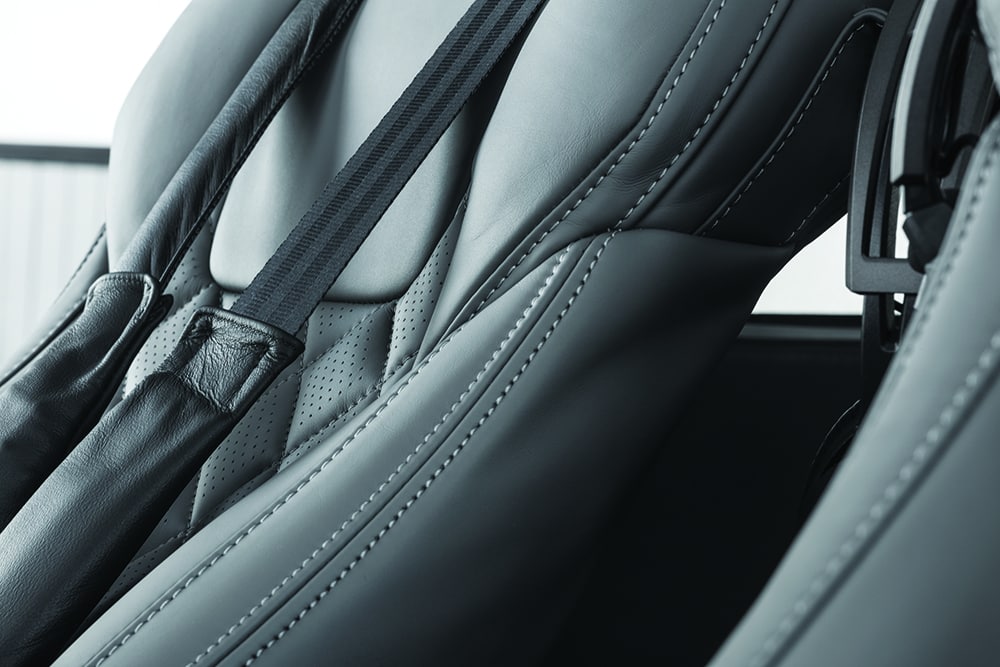
They have incorporated a huge range of items into the design to make the type as safe as it can be. Even simple little changes like high-backed seats with headrests – these have been proven to be safer than low backed seats for some time now. Remember when it was standard for car seats to have low backs or maybe even a bench seat?
Did you ever ask yourself why cars are not made like that anymore?
CAPS – Cirrus Airframe Parachute System
This is the big item that there is a lot of discussion about. It will allow the entire aircraft to float to the ground under a parachute, keeping all occupants safe and is there as a last resort for when there are no other safe options. Every Cirrus has one and to date (Jan 2019) there have been 83 Cirrus’ saved by CAPS which resulted in 169 people returned home safely to loved ones. Regardless of the many online discussions about CAPS the simple fact remains that, after other types have run out of options, the Cirrus still has one more trick up its sleeve to get you home safely. When I consider this in a training context it is even more pertinent as, due to the nature of the job, you know the person beside you cannot fly (that’s why they are training) so if something happens to me, the instructor, that student can remain safe and return home that night.
Many other items have been in the Cirrus for more than 10 years including glass cockpits for greater situational awareness, on-board weather, terrain awareness, autopilot, airbag seatbelts, solid state avionics and traffic warnings. These are things that the vast majority of other training aircraft don’t have and I constantly wonder why. The very nature of flight training makes it high workload and it is quite often conducted where there are other aircraft training as well so why not add as much extra safety equipment as you can? I am in no way suggesting we rely entirely on these devices and, for example, a good old pilot look-out is the best defense against crashing into another aircraft but it still amazes me the amount of times the traffic warning system alerts me to aircraft that are outside visual range. I can then give that area a wide berth or have ample time to plan to avoid the other aircraft or even climb/descend away from their reported level.
Since then, many more items have been added like second ADC or AHRS computers, auto-descent is hypoxia is detected, electronic stability protection, coupled go-a-rounds, under speed protection, ADSB for enhanced surveillance, better lights so other can see you and an angle-of-attack. There are many more small items like digital 3D audio that lets you easily listen to more than one radio and even small additions like this are brilliant for me as students can more easily learn the radio calls as it is not a complete garbled mess of sound coming at them. Other safety items like the electronic stability protection and under speed protection will resist the pilot input to stop them putting the aircraft into unusual or dangerous manoeuvres. It is easy enough for me to temporarily pause that to teach the students proper handling but then I know when I send that student out solo that protection is there to help them if they get into trouble.
Comfort is also something that is largely overlooked in training aircraft
Many people concentrate on the ‘important bits’ like wings and engine and completely forget about the pilot. Instead of building an aeroplane (and then putting a basic seat in somewhere for a pilot), Cirrus has designed the aeroplane around the pilot and looked at comfort as well as ergonomics. They even have air-conditioning which makes a huge difference when I am teaching circuits on those hot Australian days.
The reduction in fatigue that results from all these comfort items is astounding. A student can actually concentrate on a full lesson without fatigue setting in which maximises their chance of learning and increases retention rate. They are also able to continue with subsequent lessons as required without the lagging effects of fatigue and dehydration degrading the effectiveness of the lesson.
This is most noticeable to me during the early lessons where concentration is needed and the aircraft is flown close to the ground.
Consider some recent days where I train where it has been 34 degrees C and 70% humidity or more. I see instructors and students of other aircraft coming back from a session of circuits completely fatigued. The student is usually done for the day by then and they may not have even taken in the full lesson resulting in inefficiencies in their training. Training the same lessons in a Cirrus, however, has much greater results as the student is kept cool and hydrated and they are able to get maximum benefit from their lesson, their time and their money.
The flight instructor also needs to be considered in this equation as they should not be expected to completely fatigue themselves lesson after lesson and still remain safe. In the comfort of the Cirrus it is possible to remain at peak performance and have fatigue greatly reduced resulting in safer flying lessons. It also means that as the day goes on the afternoon students still get the best performance from their instructor and the associated efficiencies in training are again recognized.
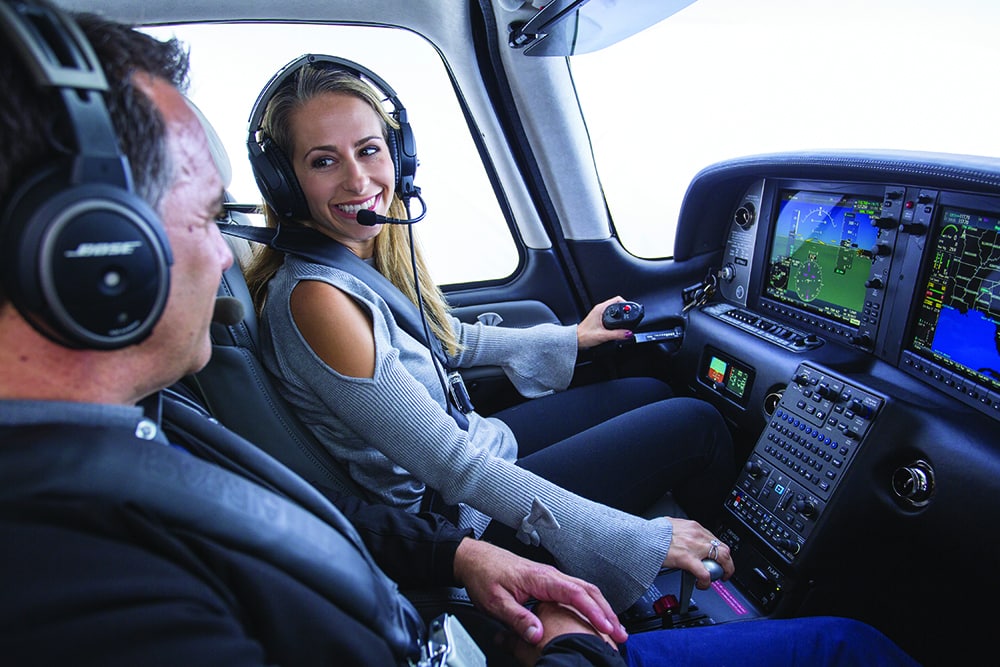
When flight training turns to the navigation phase that is where the Cirrus comes into its own
With the reduced fatigue and added speed you can range further than the normal half-dozen airfields that a student gets used to from habit. This greatly increases the training benefit as well as having greater choice to avoid weather or other traffic.
Occasionally this added speed and the additional safety items are mentioned when some say the Cirrus is not good for initial training as it is too fast or complex. I find this odd as the Cirrus will, when configured for the circuit, be doing about 100kts or less which is not that much more then the average stalwarts of training. Even at 80 kts, or even 60 kts for that matter, you are still exceeding the maximum average speeds that people are used to doing on the roads. Students will have to get used to thinking and acting faster no matter what training aircraft they use so they may as well do it in something with all the benefits I describe above. Radios, avionics and everything else are also completely new to a student. They will have to learn their systems regardless so why not learn a modern and capable system. The other training argument I have heard is to start slow and then move up to greater speed and complexity. When a student does that then they are so used to less technology and speed that the move up can take some time and effort. Training already completed in a Cirrus basically negates this step up as those skills are already in place.
Cirrus approach to flight training
I have been teaching people for more than 30 years now and agree with how Cirrus has approached training. This is a lifelong endeavor. It is not something you do without commitment and still stay safe. Initially you will ‘learn to fly’ and then Cirrus encourages you to ‘fly to learn’ – keep flying, keep going. Never do just the bare minimums to stay legal. You will not be proficient at that level and only marginally safe, if that.
Cirrus has a full syllabus suite that is tailored to their aircraft as well as Pilot Operating Handbooks and Flight Operations Manuals that provide you with standardised ways of handling the aircraft. No other manufacturer does this. These resources describe everything you need but that is not where it stops. Cirrus also has comprehensive online training as well as a YouTube channel and great videos called Flight Fix. These are all excellent resources and examples of how it should be done. On top of that the factory standardizes and certifies some instructors and you will also find a few with quite a bit of experience who the factory awards the “Platinum” status to.
It has been a long road but with over 2000 hours instructing in Cirrus and over 3300 generally in Cirrus I am proud of my Platinum instructor status and pride myself on the quality and professionalism of the training I provide.
Cirrus training is also tailored to the individual. Although the way the programs are taught are standardised for safety and consistency it is still an individual that is being taught as opposed to a course being delivered. I have come to find that this is highly valued by my clients as they have all gained experience elsewhere in their lives and the delivery of a non-tailored course will not suit them. With all the training materials Cirrus puts out it also caters for all learning styles as well as a full range of lifestyles. If you only have 5 minutes just watch a Flight Fix episode. Have an hour after tea one night? Then do an online training module. Half a day free? Pop in and do some recurrent training with your Platinum certified instructor or get them to teach you something new. Even just have them settle your nerves and both fly somewhere for a bit of fun.
The CirrusTraining.com.au community is a great one in which to get involved. It is a great aircraft, a safe aircraft and the flight training is second to none.